

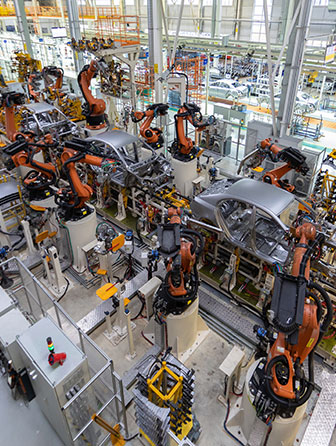
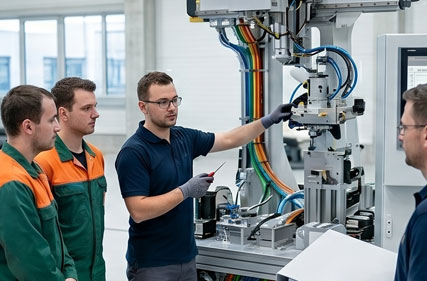
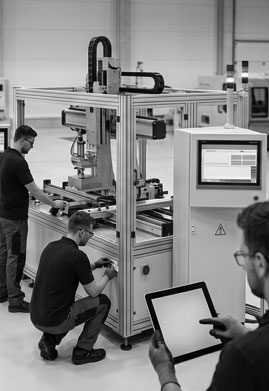
- Process review — We walk the shop floor to observe the process in live operation. We identify bottlenecks, ergonomically demanding workstations, scrap hotspots, and areas where cycle time depends heavily on operator fatigue.
- Concept and scope — We determine what can be automated and outline the logical sequence of intervention. The deliverable is a functional concept and preliminary project scope—an engineering baseline for discussion, not a rigid constraint.
- Commercial return — Based on staffing levels and internal material flow metrics, we calculate estimated payback periods within a ±15% tolerance. The higher the data fidelity, the tighter the forecast.
The audit delivers concrete findings: you identify precisely which operations warrant automation, the recommended deployment phasing, and the estimated CapEx bracket. Crucially, you also establish which steps should not be automated due to an unviable ROI.
Not every process is suitable for immediate automation. A retrofit of existing machinery or a standalone automated cell is often the optimal first milestone ahead of capital-intensive investments. Where sensible, we recommend phased delivery: a modular machine architecture allows incremental investments over one or two years rather than commissioning a monolithic line at once.
Should you decide to proceed, the concept serves as the technical baseline for budget estimation and engineering design. If not, you retain a rigorous, structured audit of your internal production process.
Show us your process
Schedule an introductory technical consultation and shop floor walkthrough. We will tell you exactly what we see—including when the figures show an unviable return.
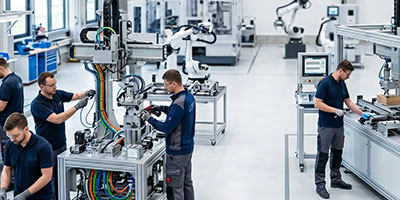
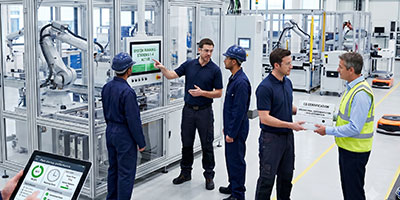
We provide a comprehensive engineering approach.
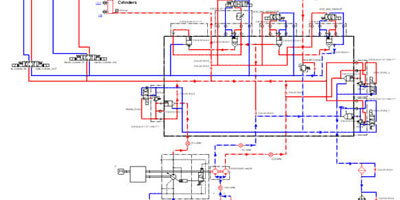
The pathway to full automation: from initial needs analysis to ongoing lifecycle support.

Frequently Asked Questions
More questions? Contact our engineering team to discuss technical feasibility.
With a technical consultation and a joint shop floor walkthrough. Comprehensive documentation is not required at the outset—we simply need to observe your process in operation.
Across our commissioned projects, payback periods typically range between two and three years. Certain corporate clients now operate on longer CapEx recovery horizons of three to four years.
Yes, as an initial forecast. We require data on baseline staffing levels per workstation and internal material flows. From these parameters, we estimate the payback period within a ±15% tolerance.
We will state it plainly. We prefer to pass on a project rather than build a machine that lacks a clear economic business case.
No. The audit concludes with a functional engineering concept—any decision to proceed remains entirely at your discretion.
Yes, we deliver projects both domestically and internationally. We have engineered and deployed replicated production machinery across multiple European sites for a single enterprise client.