
Industry: Building materials· Robotic cells· Machine cell throughput optimisation
Problem
Two different processes, the same fundamental issue. During floor panel depalletising, weight was the limiting factor: to keep up with machine output, one operator had to prepare small bundles while a second transferred them. In gutter outlet production, transfer distances were the barrier: between two presses and the conveyor, an operator would spend most of the time simply walking.
Solution
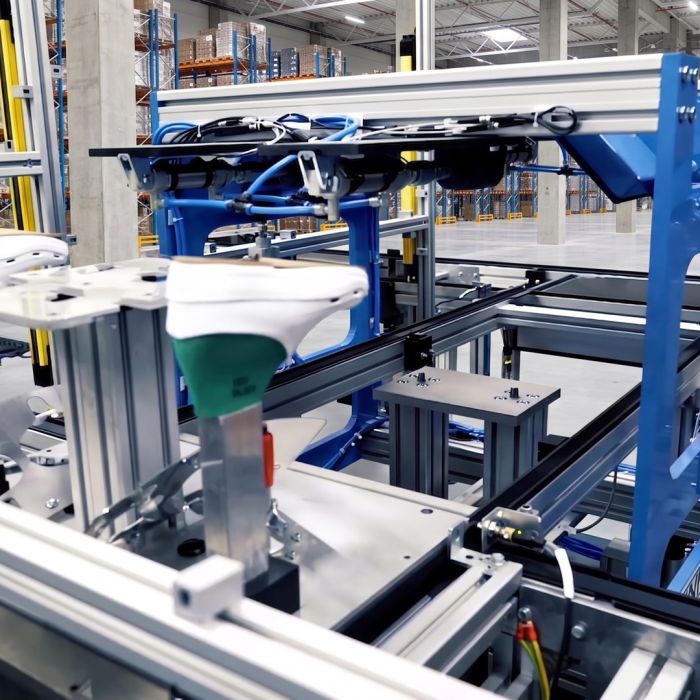
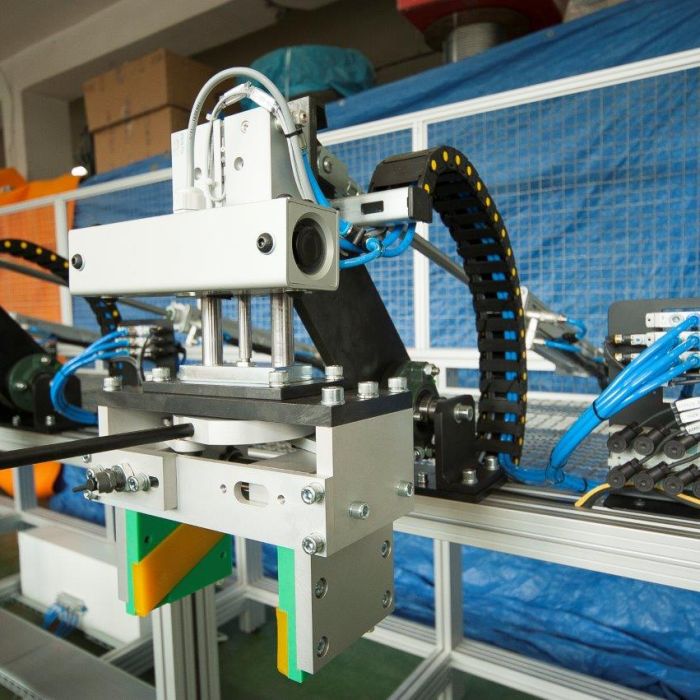
Robotic cells took over parts transfer and repositioning, synchronised with downstream machine cycle times. Choosing an articulated robot arm over a 3-axis or 4-axis gantry was a deliberate decision: when adapting to process changes, reprogramming the target points is sufficient, eliminating mechanical rebuilds.
In both cases, maintaining the required throughput manually would require 1.5 FTEs per shift—totalling 4.5 operators per day in a three-shift operation.
Results
- +30–40% — increase in overall machine cell throughput, depending on the station
- +30 min per shift — the robot operates without operator breaks, given a continuous material feed
- 1.5–2 years — return on investment (ROI)
Consistent cycle times — zero throughput degradation as the shift progresses - First major service after 2–3 years — engineered for extended maintenance intervals