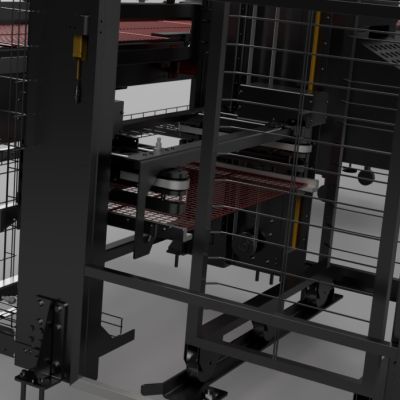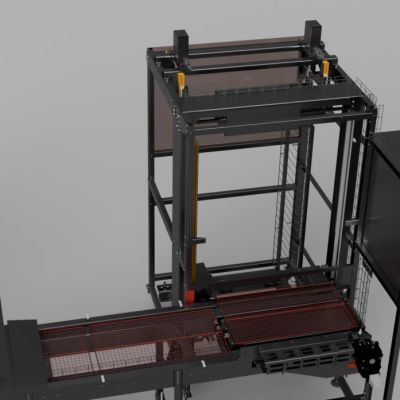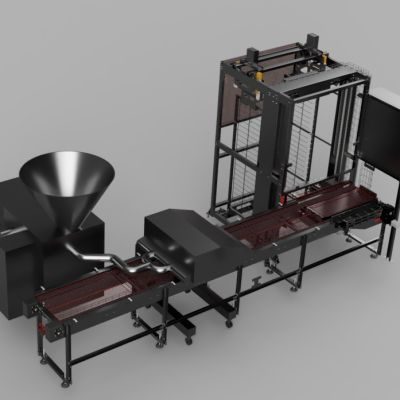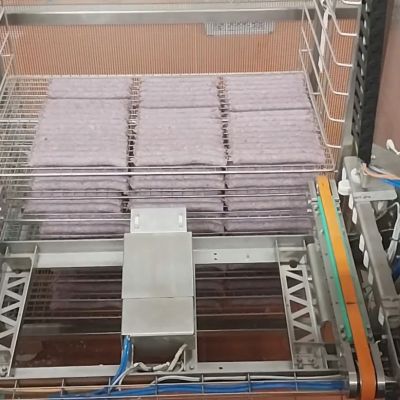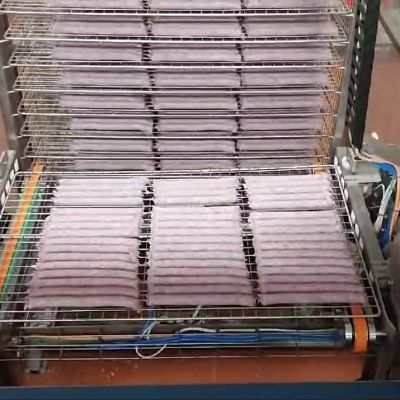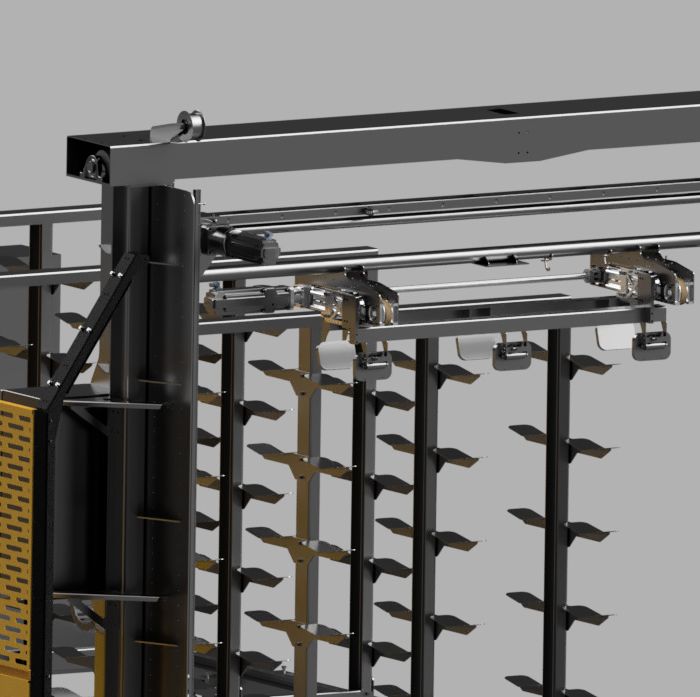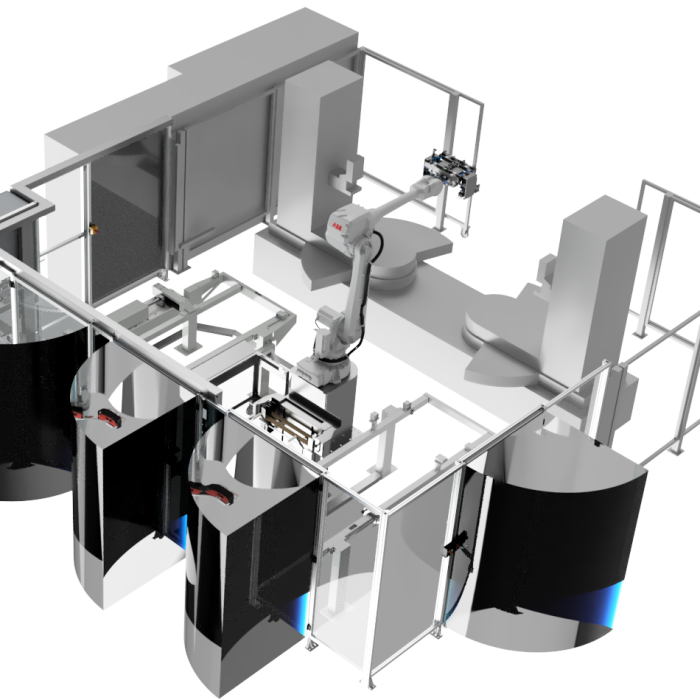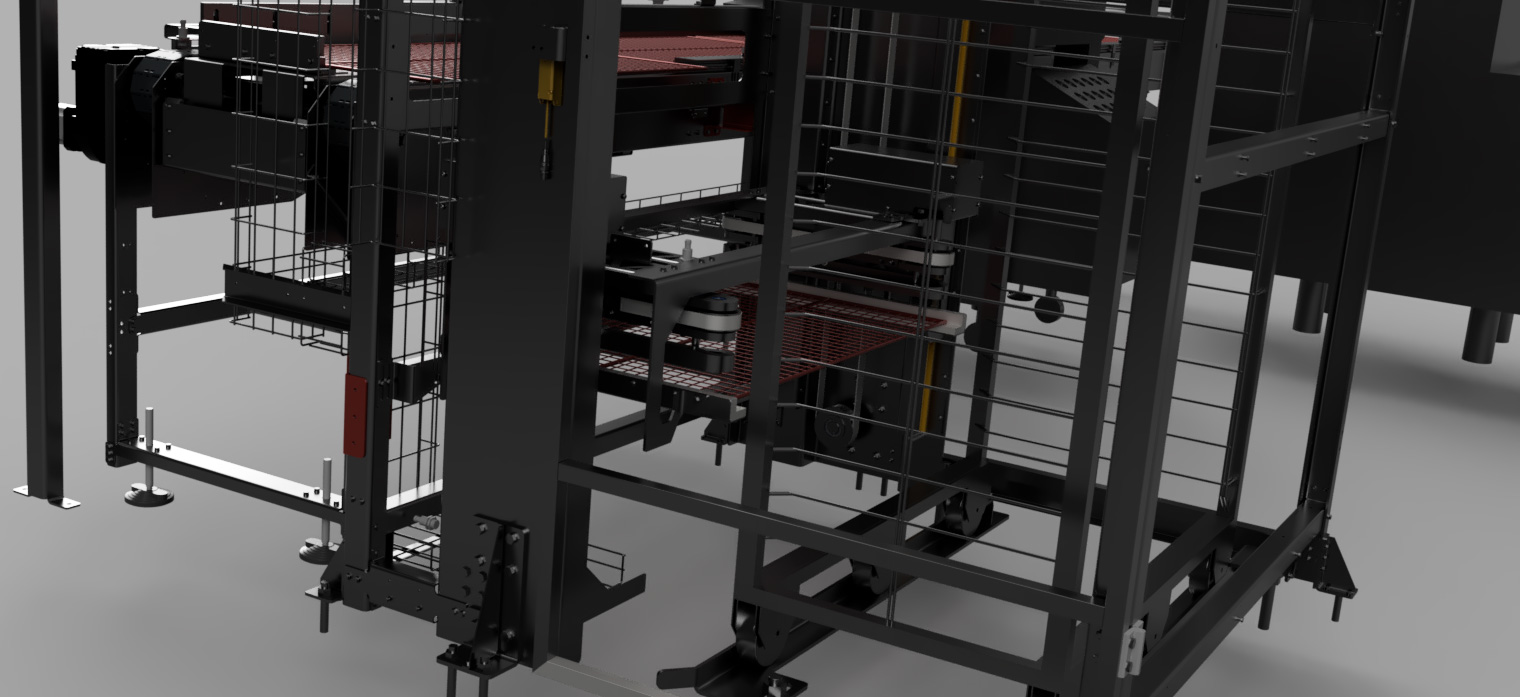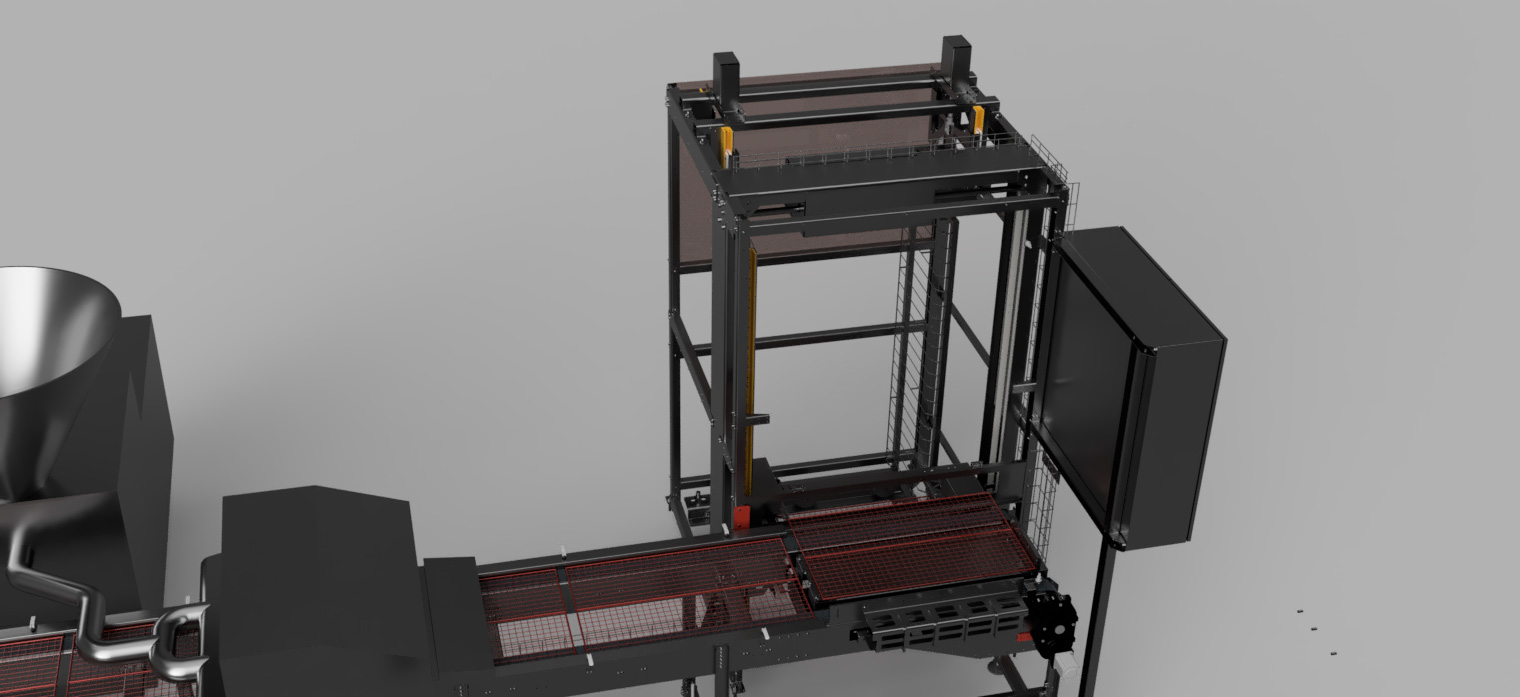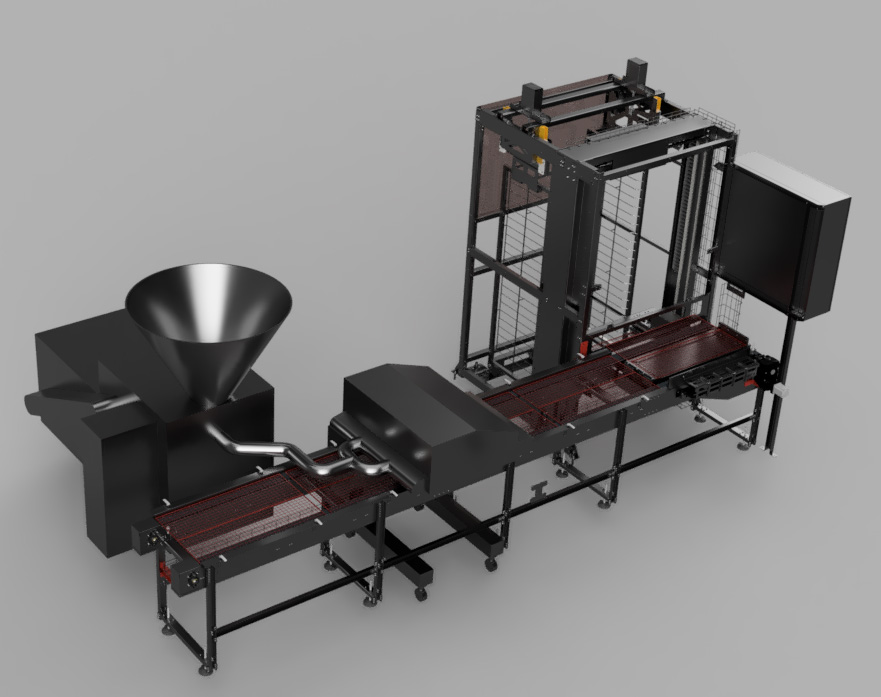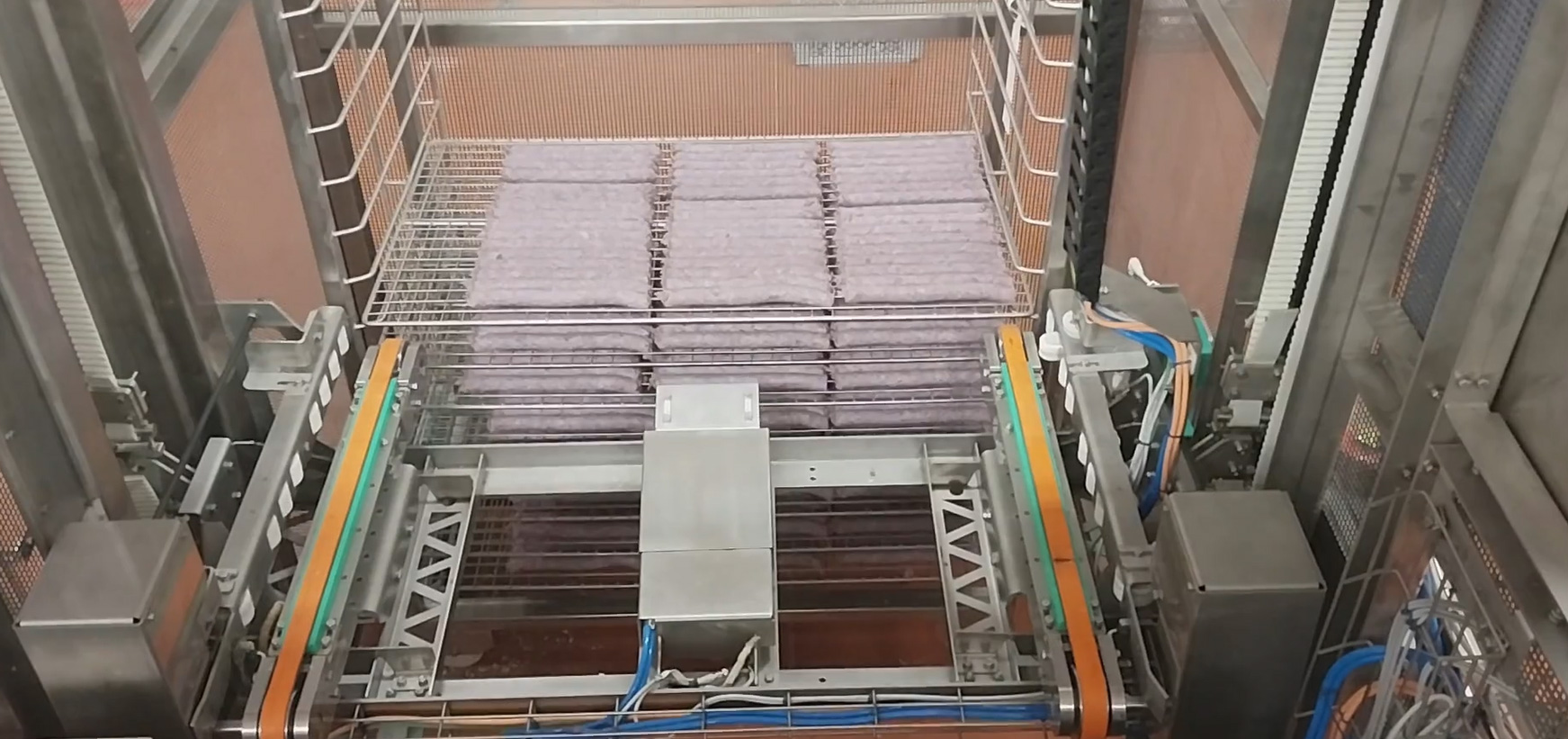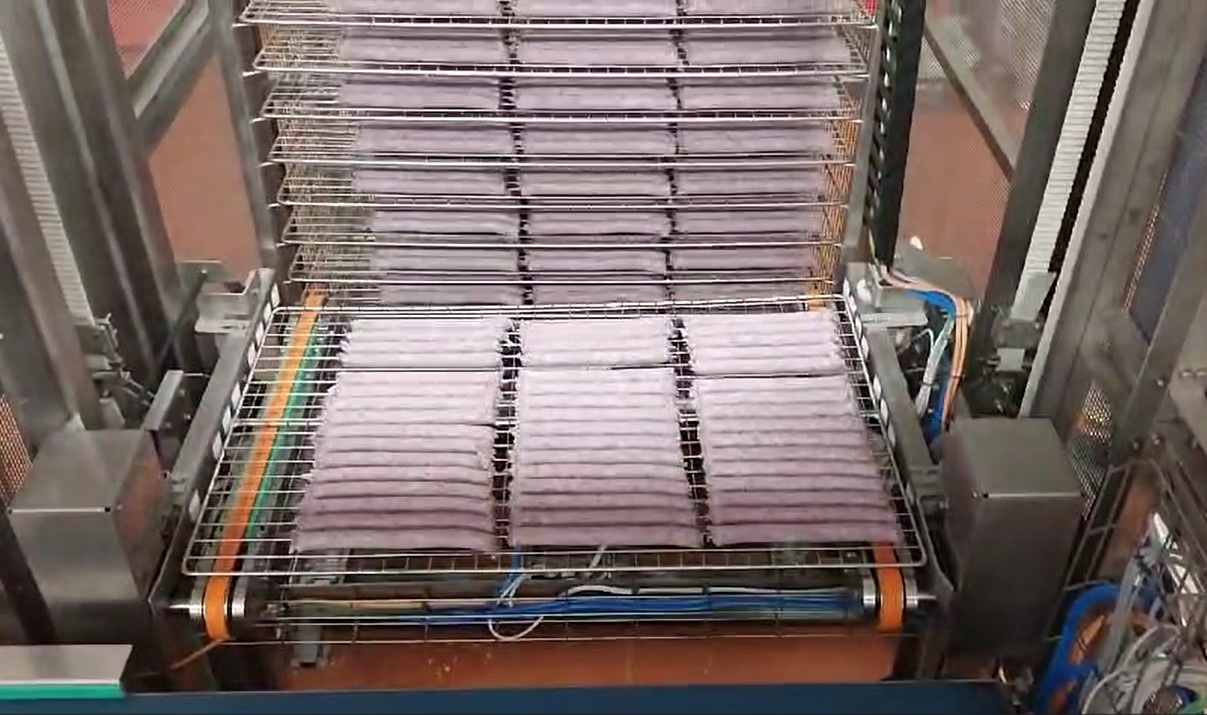

A transfer station much like a robotic cell, yet with a lower purchase price and for simpler processes, streamlines operations wherever high throughput is critical during repetitive tasks involving parts handling between two or three points in close proximity:
- transferring parts between machines, especially heavy components
- depalletising packaging, semi-finished parts or finished goods onto a machine or production line
- palletising finished products
- case packing
A transfer station requires a continuous infeed of parts and can operate continuously despite:
- harsh operating environments
- the need to handle multiple parts simultaneously to hit cycle times
- high-speed lifting of heavy components
- precision transfer of parts between machines
Compared to robotic cells a transfer station is typically designed as a 3-axis XYZ gantry/motion system. When a fourth axis or additional degrees of freedom (complex angles or multiple pick/place orientations) are required, an articulated robot cell is generally the preferred solution.
The gripper engineered for the transfer system enables even the most demanding handling tasks. Handled items include:
- cardboard packaging
- polybags and film packaging
- food products
- floor panels
- meat trays
- plastic panels of widely varying lengths
- steel roof/wall panels in various dimensions
- boards / timber planks
- heavy steel components
A properly engineered ptransfer station enables:
- Maintaining a consistent pace throughout the shift, without productivity loss
- Operating at the cycle time required by the process or upstream/downstream lines
- Adapting flexibly to production line requirements
- Reducing the headcount needed to operate the production flow
- Delivery lead time: 5–7 months